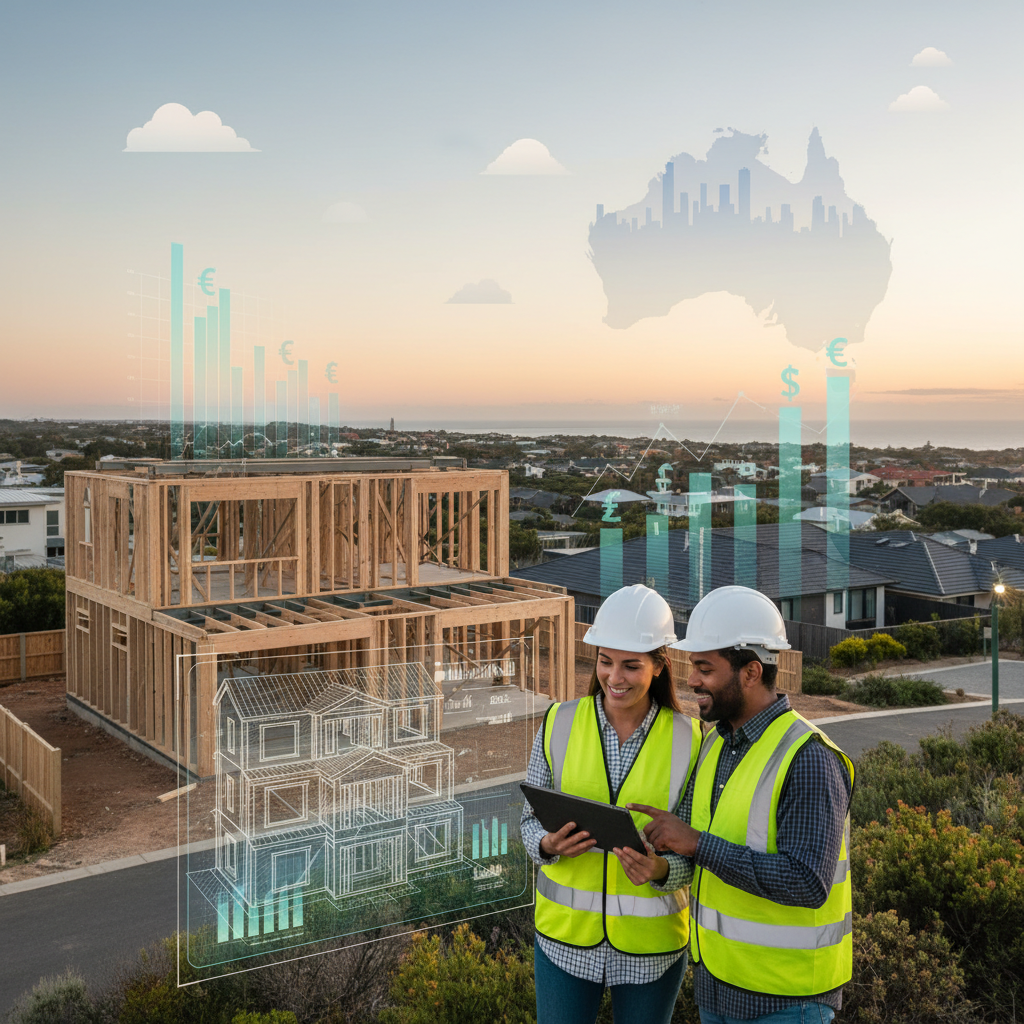
TL;DR: Australia’s construction sector is booming with a $450 billion project pipeline by 2026, which means huge demand. But this growth faces real challenges: persistent labour shortages, re-emerging global cost pressures, and higher insolvency rates. This makes careful budget management crucial for home builders and renovators.
Key Takeaways
- Australia’s construction and infrastructure sector anticipates a $450 billion project pipeline by 2026, driving unprecedented demand.
- Persistent labour shortages across key trades are increasing project timelines and costs, impacting delivery certainty for builders and homeowners.
- Re-emerging global energy shocks are driving material and logistics costs higher, with the ABS Producer Price Index showing continued upward pressure in Q1 2026.
- Elevated insolvency rates within the construction industry, as reported by ASIC, show the financial stress many contractors face.
- The Australian housing market forecast for 2026 indicates strong underlying demand, but supply constraints and rising construction costs continue to impact affordability.
- Homeowners must use detailed cost estimation and budget tracking tools to handle these Australian construction industry challenges effectively.
What is driving Australia’s record construction pipeline in 2026?
Australia’s construction outlook for 2026 sees an extraordinary $450 billion project pipeline, according to industry analysts and government reports. This strong Australia construction industry forecast is driven by a surge in major public infrastructure projects, steady demand for new housing, and a strong rebound in non-residential building across major capital cities like Sydney, Melbourne, and Brisbane. Projects range from new rail networks and hospital expansions to large-scale residential developments and commercial precincts.
This record investment shows sustained economic growth and a growing population, particularly in urban centres. For homeowners, this means a competitive environment for resources and builders. You can use a tool like HomeBuildBudget’s Suburb Cost Data to understand the specific cost landscape in your area. It gives you granular cost-per-square-metre data for over 2,500 Australian suburbs, updated quarterly from reliable sources like the ABS and HIA.
How are labour shortages impacting Australian construction projects?
Construction labour shortages Australia continues to be a major problem in 2026, significantly hitting project delivery and costs. Strong demand across all construction areas – from large infrastructure to residential builds – has created a big shortage of skilled tradespeople. According to the National Skills Commission’s 2025 Skills Priority List, occupations like carpenters, electricians, plumbers, and bricklayers remain in high demand and short supply.
This scarcity leads to longer project timelines and increased labour rates, directly affecting your overall building budget. Builders struggle to find enough teams, often leading to delays and additional overheads, which are then passed on to you. This environment has also contributed to higher insolvency rates. ASIC data for Q4 2025 shows a clear increase in construction company failures compared to the previous year, showing the financial pressures on contractors.
To deal with this, thoroughly comparing builder quotes isn’t just about price; it’s about understanding a builder’s capacity and workforce stability. HomeBuildBudget’s Builder Quote Comparison feature lets you compare up to 5 builder quotes side-by-side, with AI-powered line item analysis, so you can spot discrepancies and potential red flags related to labour costs and project timelines.
What new cost pressures are emerging in the Australian construction sector?
Re-emerging cost pressures from global energy shocks are really hitting Australian construction in 2026, adding to an already tricky cost environment. Increases in global oil and gas prices directly mean higher transportation costs for materials and increased manufacturing costs for energy-intensive products like steel, concrete, and plastics. The ABS 6427.0 Producer Price Index Q1 2026 shows continued price increases for key building materials, with some categories seeing year-on-year increases of 8-12%.
This is made worse by ongoing fragile supply chains, particularly for imported fixtures and specialised components. For example, recent geopolitical events, as discussed in our related post /blog/middle-east-conflict-drives-double-digit-build-cost-spikes-i, have driven double-digit build cost spikes in specific material categories. These factors mean that even with careful planning, material costs can fluctuate unexpectedly.
Managing these changing costs means you need to stay alert in real-time. HomeBuildBudget’s Cost Calculator helps you estimate construction costs by room type, material grade, and suburb-level labour rates. Our Budget Tracker lets you track actual spending against estimates with real-time alerts when categories exceed thresholds. This proactive approach works best in a market where costs are continually shifting, as detailed further in /blog/australian-home-building-costs-surge-whats-driving-2026-incr.
What is the forecast for the Australian housing market in 2026?
The Australian housing market forecast for 2026 shows continued strong demand, driven by strong population growth and increasing migration rates. Despite a big pipeline of new residential projects, supply still struggles to keep up, particularly in capital cities like Perth and Adelaide. This imbalance contributes to ongoing affordability challenges and supports continued, albeit moderated, property price growth. The HIA’s April 2026 Housing Scorecard shows the persistent gap between dwelling approvals and completions, meaning supply isn’t catching up fast enough.
For those looking to build or renovate, this strong market means competition for land and existing properties remains high. While new builds offer custom solutions, they come with the challenges mentioned earlier of cost inflation and delivery delays.
Here’s an example of typical build cost ranges you might encounter:
| Project Type | Quality Level | Estimated Cost (per sqm) | Key Factors |
|---|---|---|---|
| Standard New Build | Basic Finish | $1,800 – $2,200 | Standard inclusions, basic fittings, volume builder |
| Mid-Range New Build | Quality Finish | $2,500 – $3,500 | Custom design, better materials, energy efficiency |
| Luxury New Build | Premium Finish | $4,000 – $6,000+ | High-end materials, bespoke features, complex design |
| Major Renovation (Kitchen) | Mid-Range | $25,000 – $50,000 | Cabinetry, appliances, benchtops, labour |
| Major Renovation (Bathroom) | Mid-Range | $15,000 – $35,000 | Tiling, fixtures, waterproofing, labour |
Note: These are indicative ranges for Sydney and Melbourne in Q2 2026, based on HomeBuildBudget data and industry averages. Actual costs vary significantly by suburb, builder, and specific material choices.
When planning your project, always allocate a 15-20% contingency fund to cover unexpected cost increases. This is a crucial budgeting tip in this volatile market.
How can homeowners navigate the current Australian construction industry challenges?
Dealing with the complex Australian construction industry challenges in 2026 means you need a proactive, data-driven approach, especially for first-time home builders and renovators. A record project pipeline, labour shortages, and re-emerging cost pressures mean budget certainty and project delivery are top concerns. Relying on accurate, localised cost data is more important than ever to avoid budget blowouts.
Your first step should be a detailed cost estimation. Instead of relying on general averages, use tools that provide suburb-level specificity. HomeBuildBudget’s platform gives you granular cost-per-square-metre data for over 2,500 Australian suburbs, updated quarterly. This helps you plan your project with realistic expectations from day one, whether you’re building in Perth’s northern suburbs or renovating in Melbourne’s inner east.
Next, meticulous budget tracking is vital. The market’s volatility means costs can shift, and being alerted in real-time when categories exceed your estimates is invaluable. Our Budget Tracker provides these alerts, helping you make informed decisions before small overruns become major problems. Finally, never accept the first quote. Our Builder Quote Comparison feature helps you analyse multiple offers, so you get competitive pricing and a clear idea of what’s included. This comprehensive approach gives you the power to stay in control over your project and your finances, even in a challenging market.
Frequently Asked Questions
What is the Australian construction outlook for 2026?
The Australian construction outlook for 2026 is marked by an unprecedented $450 billion project pipeline, signalling a booming sector. However, this growth is tempered by significant challenges including persistent labour shortages, re-emerging material cost pressures, and elevated insolvency rates, making project delivery certainty a key concern.
Are construction labour shortages still an issue in Australia?
Yes, construction labour shortages in Australia remain a critical challenge in 2026, exacerbating project delays and driving up costs. The demand for skilled tradespeople, from carpenters to electricians, far outstrips supply, impacting both large infrastructure projects and residential home builds across the nation.
What are the main cost pressures affecting Australian construction in 2026?
In 2026, Australian construction costs are facing renewed pressure from global energy shocks, which increase transportation and material manufacturing expenses. Additionally, persistent labour shortages and a tight supply chain for certain imported materials continue to contribute to elevated building costs for homeowners and developers.
What is the housing market forecast for Australia in 2026?
The Australian housing market forecast for 2026 indicates continued strong demand, particularly in major capital cities, driven by population growth and immigration. Despite a record pipeline of new residential construction, supply remains constrained, contributing to ongoing affordability challenges and high property values.
How can I manage my budget for an Australian home build or renovation in 2026?
To manage your budget effectively for an Australian home build or renovation in 2026, utilise tools that offer suburb-level cost data and real-time budget tracking. Compare multiple builder quotes meticulously and factor in significant contingencies for potential cost increases and project delays due to market volatility and labour constraints.
Build Smarter, Not Harder in 2026
The Australian construction sector in 2026 presents both big opportunities and real hurdles. While the $450 billion project pipeline shows a strong industry, homeowners must be prepared for the realities of labour shortages, rising material costs, and the need for strict budget management.
By using data-driven platforms like HomeBuildBudget, you can get clarity on suburb-level costs, compare builder quotes with confidence, and track your spending in real-time. Don’t let market complexities derail your dream home or renovation project.
Get Your Free Estimate → https://homebuildbudget.com/calculator
Related Articles
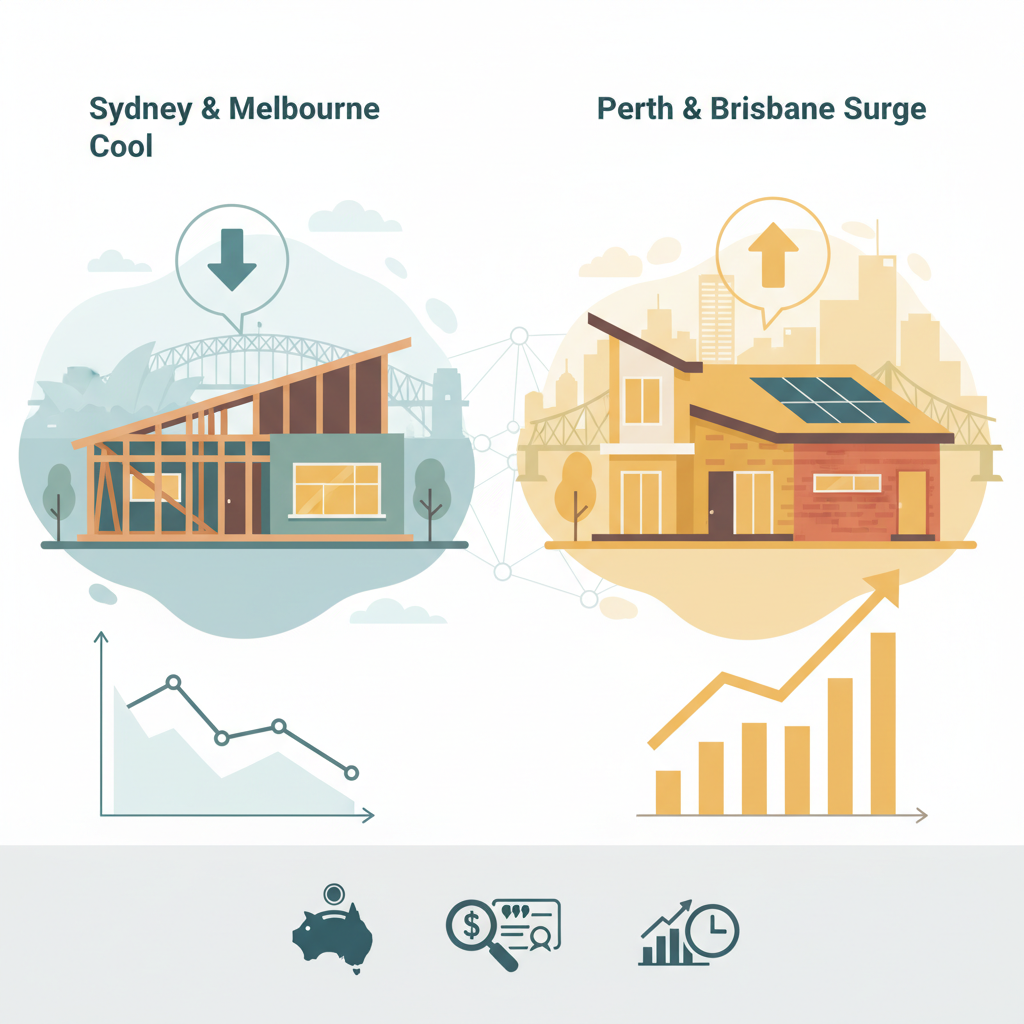
Australia's Two-Speed Housing Market: Sydney & Melbourne Cool, Perth & Brisbane Surge in 2026
Sydney and Melbourne prices decline while Perth and Brisbane surge in early 2026. How this two-speed housing market affects your building plans.
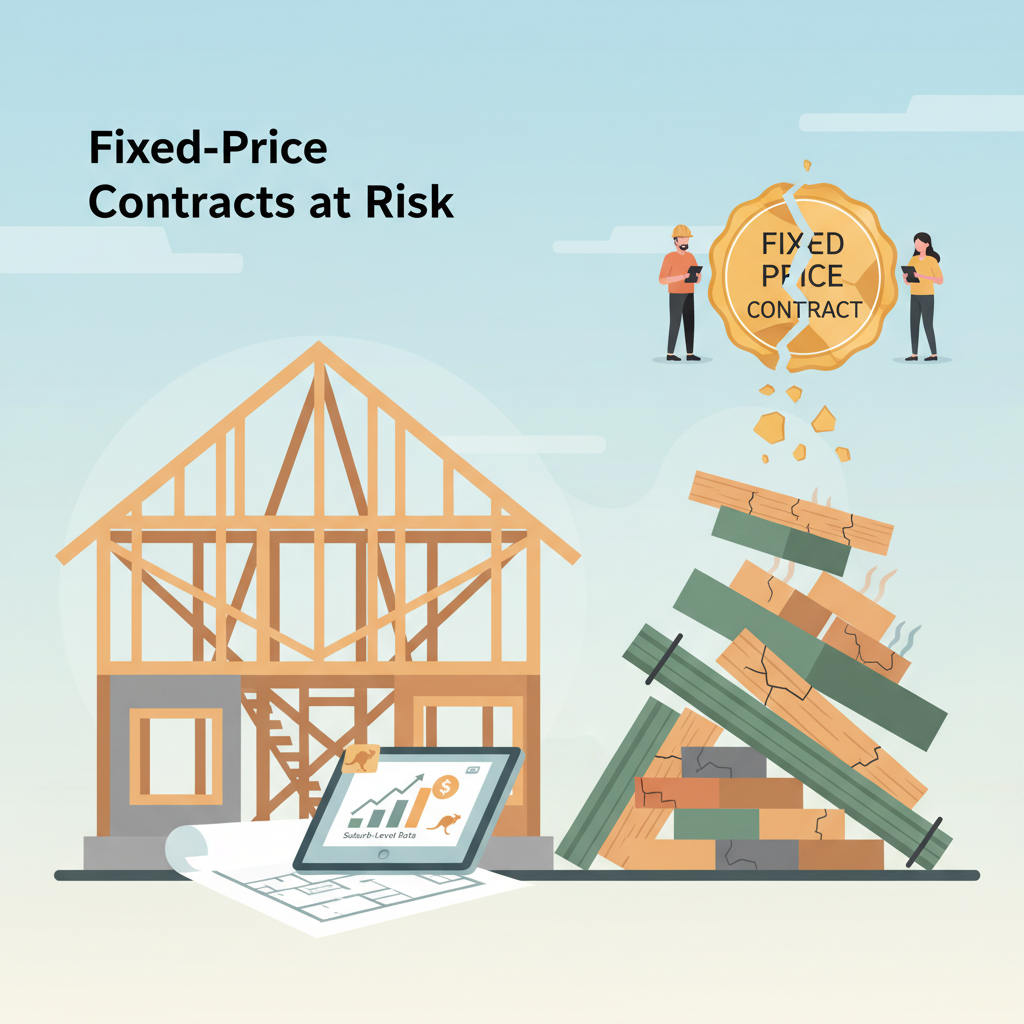
Fixed-Price Building Contracts at Risk: Navigating Rising Costs
Fixed-price building contracts face severe risk from surging PVC, cement, and quarry costs in Australia. What homeowners must know to protect themselves.